







Occupational Health and Safety
Challenges and Commitments
Labor is a crucial factor in driving sustainable business operations. GGC therefore focuses on enhancing employee capability and places strong emphasis on human rights risks. GGC manages safety in both production processes and personal safety in accordance with international standards such as the United Nations Guiding Principles on Business and Human Rights (UNGP) to prevent risks, reduce potential losses, and promote equal treatment in line with human rights principles
Key Stakeholders

Employee

Supplier and Business Partner

Customer
For additional information on stakeholder engagement: Stakeholder Engagement
Goals
process accidents is
0
in 2025
process accidents is
0
0 in 2025

Frequency Rate (LTIFR) is
0
in 2025

Key Performance in 2025

Management Approach
5-Year Occupational Health and Safety Strategy (2020–2024) GRI 403-1 (2018), GRI 403-2 (2018)
 Personal Safety
|
|
 Process Safety
|
|
 Off the job Safety
|
|
 Emergency / Crisis Management
|
|
For additional information on Health and Safety Performance: Performance Data 2025
Duties of the Occupational Health and Safety Culture Committee GRI 403-4 (2018)
Safety Culture Committee (The S.A.F.E team) comprises members from multiple departments with support from senior management. The committee is chaired by the Assistant Managing Director of Operational Excellence and managers from Operations, Production Technology, and Engineering & Maintenance from both plants, with the Quality, Safety, Occupational Health, and Environment unit serving as advisors.
The S.A.F.E. Team is committed to four key pillars




These efforts have driven tangible enhancements in plant safety systems.
From the establishment of the S.A.F.E. Team, GGC expects the following outcomes and benefits:
- Form subgroups to analyze SWO and Near-Miss reports, with Safety Engineers coordinating at each plant to encourage employee participation in risk identification and assessment
- Present analysis results at monthly SHE Committee Meetings to discuss corrective actions and prioritize safety issues
- Strengthen organizational safety culture and facilitate open communication channels between employees and the SHE Committee
In addition, GGC has established the SHE Steering Committee to oversee and monitor compliance with internal safety, health and environmental standards in alignment with international best practices and to support the goal of becoming a Zero-Accident Organization. GGC has also established the Occupational Health and Safety Committee, comprising employee representative, to provide consultation channel, monitor SHE performance and report monthly progress.

1. Set and review SHE policies, goals and work plans

2. Supervise, support and monitor SHE performance to comply with international standards and be consistent with GGC policies

3. Review, approve and issue the SHE Manual and key operational processes

4. Hold SHE Committee Meetings at least six times a year

5. Ensure a quorum of no less than one-half of committee members

6. Appoint sub-committees or working groups as necessary
Process Safety GRI 403-3 (2018)
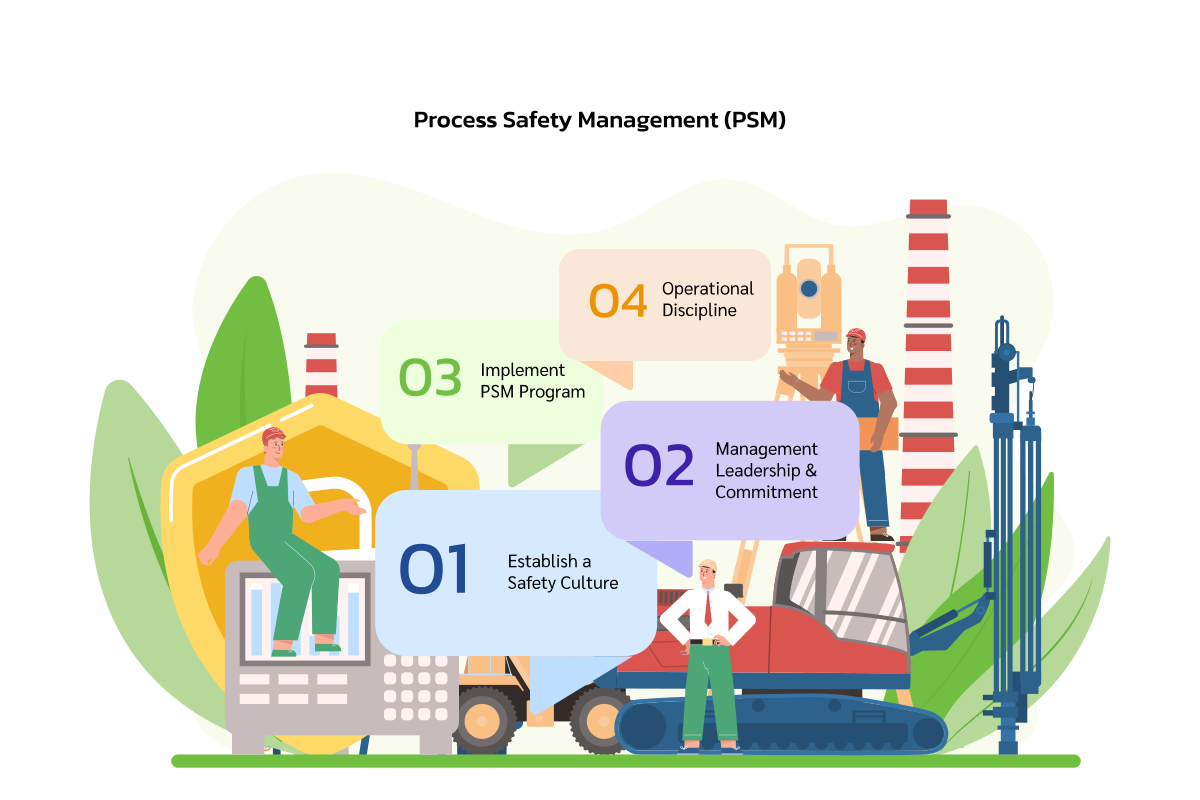
GGC applies the Process Safety Management (PSM) standard and implements the Plant Reliability Master Plan to ensure that production operations are continuous, efficient, and achieve the highest level of safety. In addition, process safety performance is verified by independent external assessors, and GGC establishes measures to reduce risks related to machinery, production efficiency, and the prevention of unsafe events.
Bow-Tie Barrier Validation Checklist Program
GGC applies the Bow-Tie risk identification methodology to monitor and control process safety incidents. The Bow-Tie approach is used as a tool to verify the effectiveness of control measures (barriers of protection) to prevent and mitigate the impacts of Major Accident Events (MAE). GGC reviews and evaluates the Preventive Maintenance (PM) performance of protective equipment, together with field inspections. If a defect is found, the relevant department must correct it to restore normal, efficient operation and prevent serious accidents. The results are then used to continuously improve and address gaps in the safety system, maintain safe operations, reduce production interruptions, and strengthen the safety system to effectively respond to emergency situations both now and in the future. In 2025, GGC continued to assess risks at its plants in Rayong and Chonburi Provinces, including assessing the risk of methanol leakage, which could potentially lead to fires or explosions.
Outcomes and Benefits
- Effectively prevent and reduce the risk of major accidents at plants
- Reduce production interruptions, enabling continuous business operations
- Enhance safety systems and standards to be ready for potential emergency situations in the future
Field Risk Assessment (FRA) & Smart SWO Program
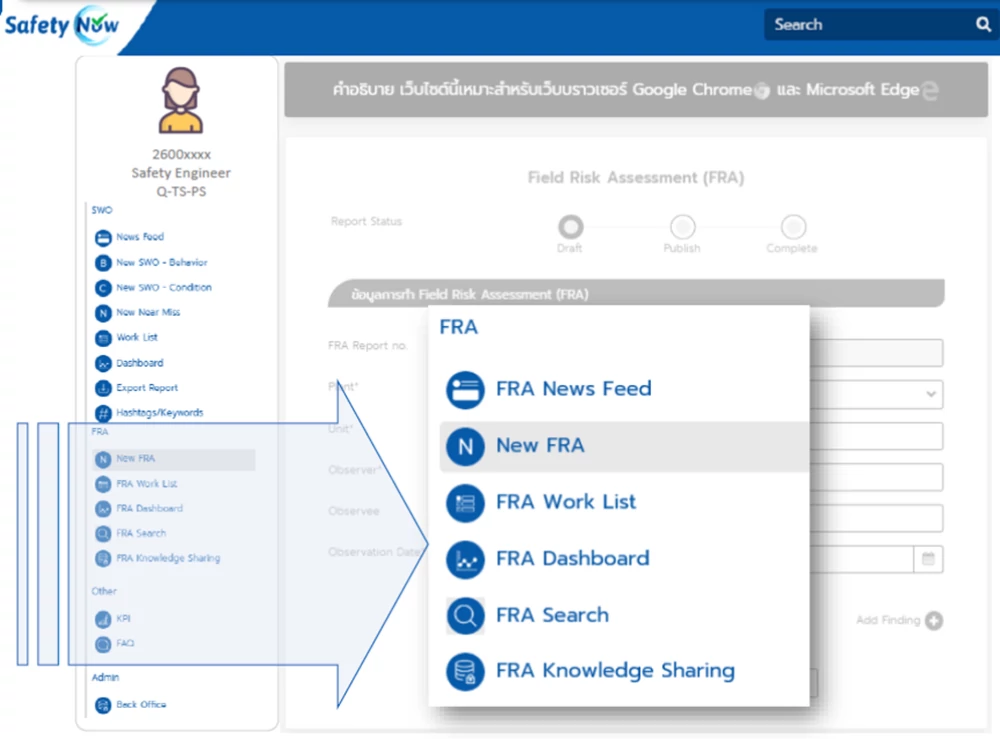
The Field Risk Assessment (FRA) Program has been established to strengthen field safety standards for employees. The main objective is to identify, analyze, and assess risks arising from actual operations in three aspects: Personnel, Facility, and Technology, so that Barriers of Protection can function with maximum effectiveness. This approach helps reduce potential losses from serious incidents such as explosions, chemical leaks, and fires. GGC provides regular training on FRA risk identification procedures to enhance knowledge and understanding of risk reporting, risk prevention, and initial response planning. In 2024, GGC prepared an annual FRA report and identified a total of 23 findings (8 Deviations and 15 Positives), which were used to develop an action plan for 2025.
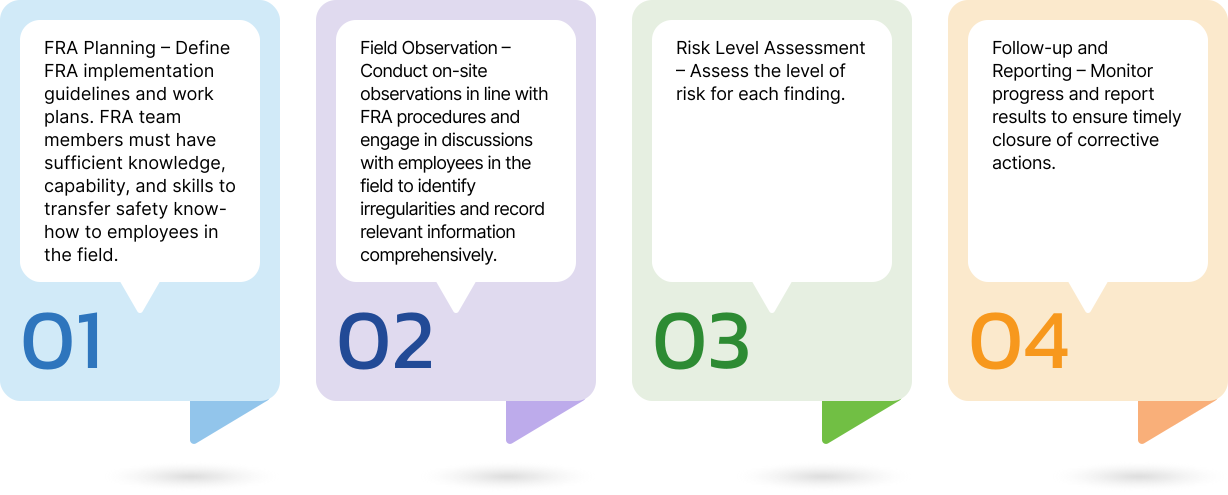
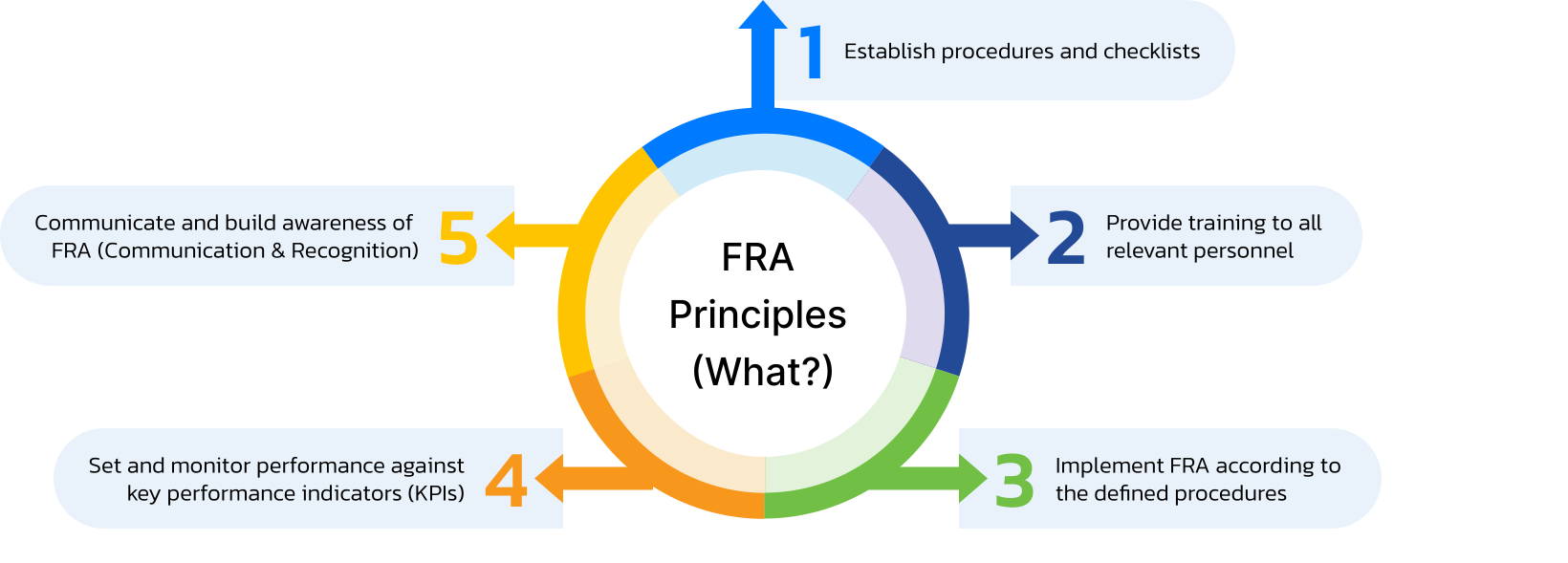
GGC assigns employees to regularly conduct on-site inspections to assess the condition and readiness of production and safety equipment, and to prepare reports identifying issues to be improved in 2025. The focus is on assessing safety systems at both refineries, such as fire equipment cabinets, fire hoses and pipelines, the operating mechanisms of Fixed Monitors, Fire Water systems, foam systems and foam chambers, as well as protective equipment for the production process to ensure readiness and effectiveness in responding to emergency situations.
Outcomes and Benefits
- Develop the FRA Work Plan for 2025, with FRA activities scheduled twice per month and progress monitored quarterly
- Promote participation from employees across multiple departments, including Operation, Process & Technic, SHE Engineer, Maintenance, and ERS, with over 30 participants jointly conducting activities and risk assessments
Business Continuity Plan : BCP
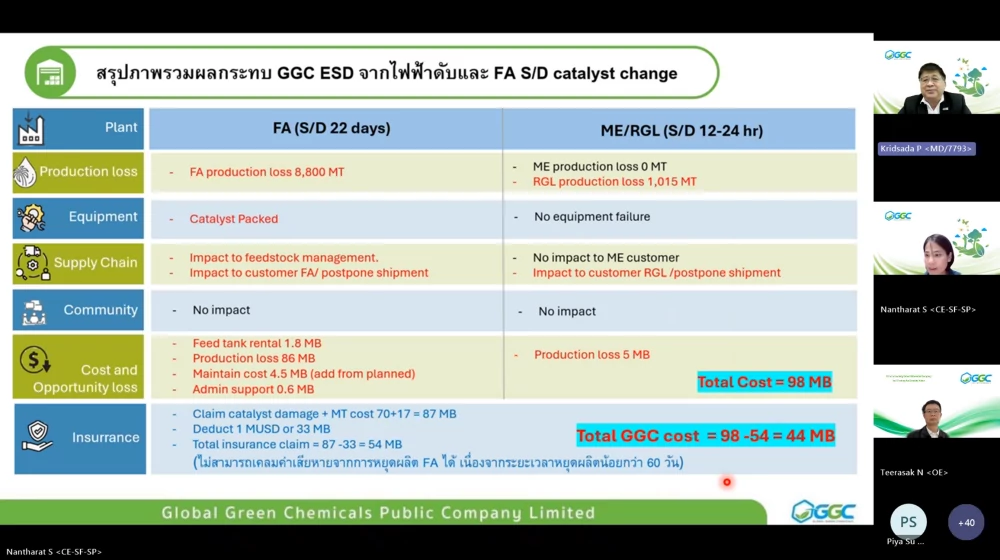
GGC conducts Business Continuity Plan (BCP) drills annually to enhance understanding of roles, duties, and responsibilities, and to rehearse departmental strategies. The drills also strengthen coordination between units to minimize errors in real emergency situations. In 2025, GGC conducted one BCP drill in October. The scenario involved managing a Power & Steam Disruption caused by extreme weather, which led to an emergency shutdown of the main power supplier (GPSC), resulting in the inability to supply electricity and steam to GGC facilities. Relevant units collaborated systematically throughout the drill.
Outcomes and Benefits
- GGC can appropriately and promptly manage and respond to emerging risks, enhancing responsiveness to incidents and reduce impacts on business operations
- Business Continuity Plan Directors clearly understand their roles, duties, and responsibilities
- Relevant departments can promptly implement corrective actions and coordinate effectively, strengthening the application of each unit’s strategies to support continuous business operations
e-JSEA Program
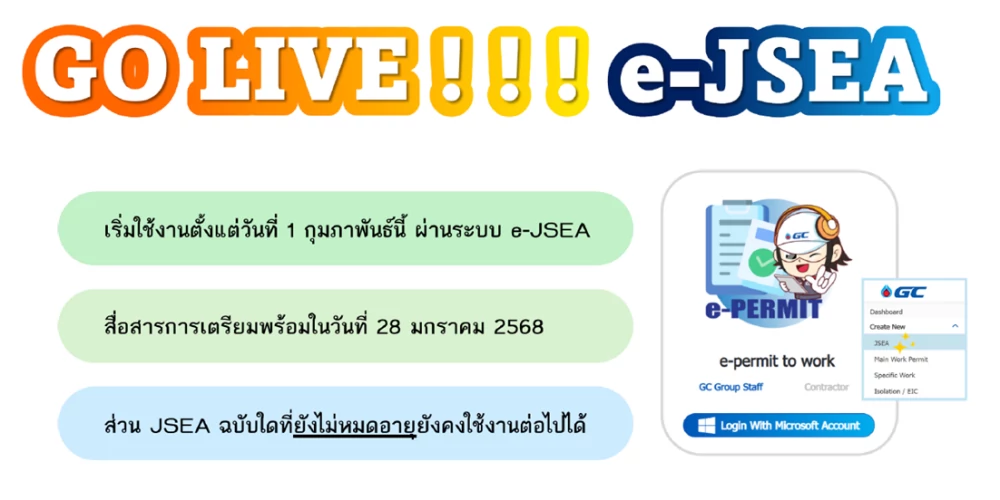
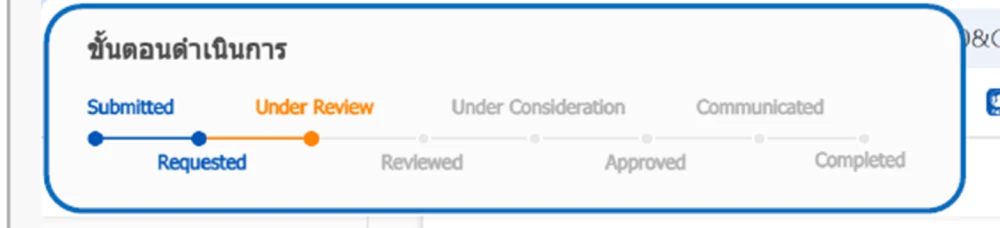
The e-JSEA (Job Safety and Environmental Analysis System) Program aims to enhance the efficiency of safety analysis for high-risk work by transforming the traditional paper-based Job Safety and Environmental Analysis (JSEA) into an online system. The system enables systematic and transparent preparation, approval, storage, and monitoring of JSEA documents. The e-JSEA system has been in operation since 1 February 2025, while existing, unexpired JSEA documents remain valid.
In the e-JSEA system, the approval process starts when the Requestor submits a JSEA request by completing all required information in the system form and confirming submission after meeting with the relevant departments. Once submitted, the document enters the Review stage, where designated reviewers from the relevant units examine the content. After the review is completed, the document moves to the Approval stage, where authorized approvers from each relevant unit provide final approval. When all approvals are obtained, the document status changes to “Approved”.
Approved JSEA documents are valid for 1 year from the approval date. They can be printed for use and attached to the Permit to Work. All documents are stored in the JSEA Library for future review and reference.
Outcomes and Benefits
- Increase convenience in preparing, approving, and reviewing JSEA documents through a real-time online system
- Reduce data storage errors and enable effective tracking of approval status
- Strengthen employee understanding of safety, especially for high-risk work such as Hot Work, Confined Space entry, and heavy lifting operations
- Provide support channels through the Line Group “GGC e-Permit Support” and the ServiceNow (ICT Support) system to ensure prompt resolution of system-related issues
Personal Safety GRI 403-2 (2018)
GGC promotes a safety culture to enhance personal safety awareness among employees and contractors. Various tools and mechanisms are implemented to drive continuous safety culture development, including 5S activities, monthly Occupational Safety Committee (OSH Committee) meetings to report progress on safety performance, accident risk reporting, ongoing Safety Walk Observation (SWO) activities, and the establishment of safety standards and procedures.
Rising Safety Awareness GRI 403-2 (2018)
GGC continues to raise safety awareness and strengthen the management of essential standards for all personnel involved in production. Key elements include ensuring plant safety in compliance with legal requirements and Process Safety Management (PSM), implementing plans to reduce energy consumption in production, promoting safe work discipline, and planning to reduce production waste (Waste Reduction).
Safety Commitment Workshop
GGC organizes the Safety Commitment Workshop to enhance knowledge and understanding of occupational health and safety among internal personnel and contractors. The objective is to encourage contractor management to endorse and commit to the goal of becoming a Zero Accident Organization. The workshop also provides guidance and training on the 5Rs principles during Plant Shutdown to build shared understanding and reduce accident risks and impacts on GGC. In 2025, 100% of contractors participated in the program.
Outcomes and Benefits
- Strengthen safety awareness and collaboration between GGC and contractors
- Reduce accident risks and impacts during Plant Shut down
- Reinforce an organizational culture focused on achieving a sustainable Zero Accident target
GGC QCC Program
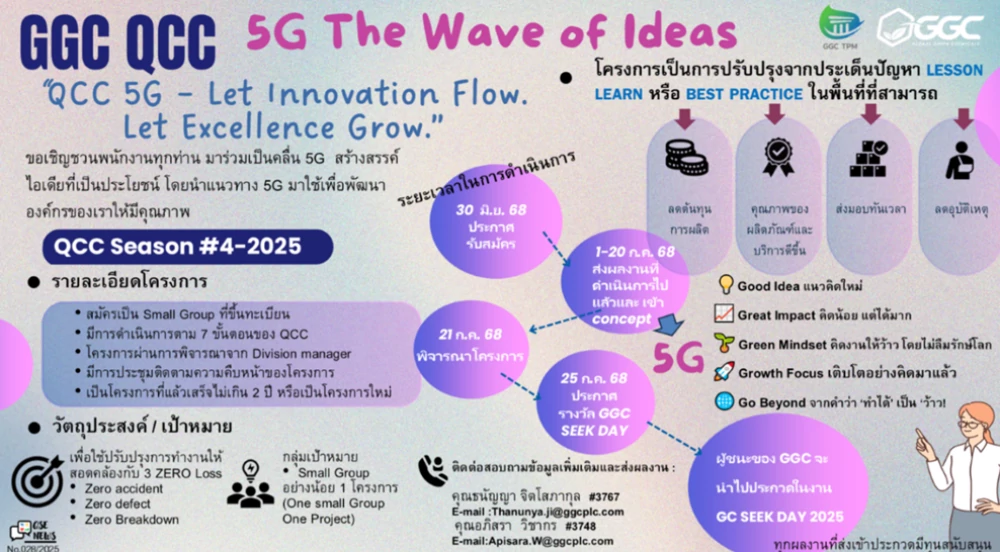
GGC organizes the GGC QCC (Quality Control Circle) Program to encourage employees at all levels to participate in work quality improvement and innovation. The program is based on the concept “QCC 5G – Let Innovation Flow. Let Excellence Grow.” to support continuous improvement and create value for the organization through Lesson Learned and Best Practice sharing within each unit.
The program encourages all units to develop projects that align with the organizational goals of ZERO Loss, ZERO Accident, and ZERO Breakdown, and supports the “One Plant One Project” concept to drive excellence in quality and innovation.
Outcomes and Benefits
- Promote creativity and work improvement at team level through Small Group activities and project presentations at QCC events
- Support an organizational culture focused on innovation, quality, and sustainability
- Successful projects are further developed in subsequent years, increasing opportunities to create positive impacts for the organization
One Supervisor One B-CAREs Program
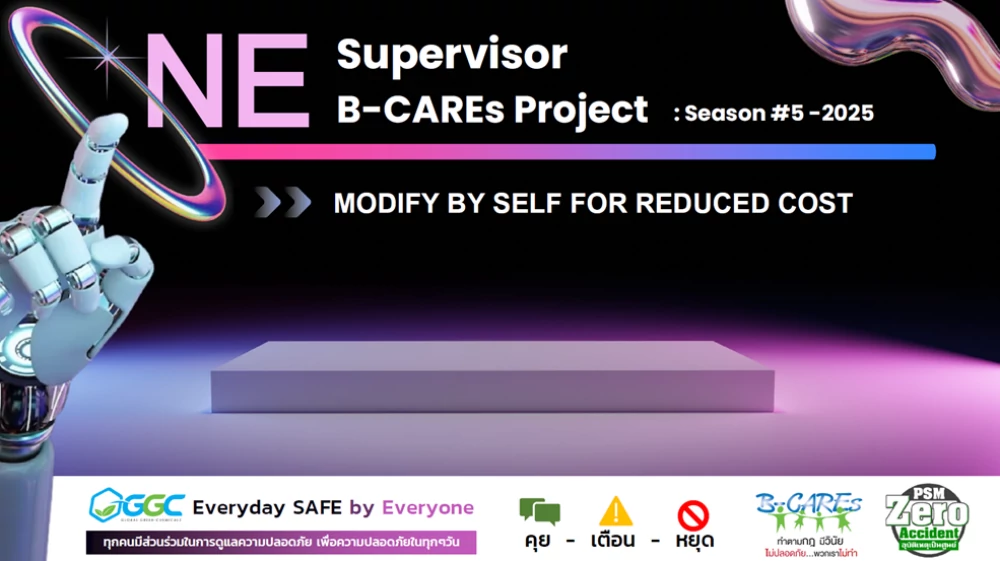
GGC focuses on strengthening safety participation among supervisors, frontline employees, contractors, and related units through a safety improvement competition based on Engineering Control to eliminate hazards at the source and establish a Safety in Line Responsibility culture.
The “Modify by Self for Reduced Cost” initiative is part of the B-CAREs Project: Season #5 – 2025. It aims to encourage employees at all levels to participate in maintaining workplace safety under the concepts “Everyday SAFE by Everyone” and “Talk – Caution – Stop” to prevent accidents and reduce operating costs. The initiative emphasizes safe and effective self-modification and repair of equipment.
Outcomes and Benefits
- Strengthen a robust safety culture and reinforce safety awareness at all levels
- Achieve cost savings of more than 1 Million Baht while enhancing the safety level of work areas, based on risk identification initiated by employees
- Promote the concept of “efficient cost saving” and proactive safety practices within the organization
Yearly Health Check Program
The Yearly Health Check Program focuses on holistic employee health management to promote preventive healthcare, enhance safety at work, and modernize health data management systems.
- Yearly Health Check: Employees receive an annual health check-up once a year to improve service efficiency and reduce waiting times. Employees working in confined spaces undergo specialized health examinations every 6–12 months, including testing of safety equipment such as SCBA and Fit Test, to assess readiness for safe work.
- Health Promotion and Weight Control: The “GO FIT TOGETHER” campaign is implemented to monitor employees’ Body Mass Index (BMI), targeting at least a 5% reduction in the proportion of employees in high-risk BMI categories. The program also aims to increase participation in health activities and build sustainable healthy habits.
- Health Data Management through DHC (Digital Health Care):Health data are stored and integrated in digital format to support tracking, analysis, and the development of digital health management approaches.
Outcomes and Benefits
- Foster a continuous health culture in the organization and enhance workplace safety, especially for work in confined spaces
- Reduce health risks related to overweight conditions and non-communicable diseases (NCDs)
- Improve the efficiency of health data management and readiness for future digital health applications
B-CAREs KYT Program
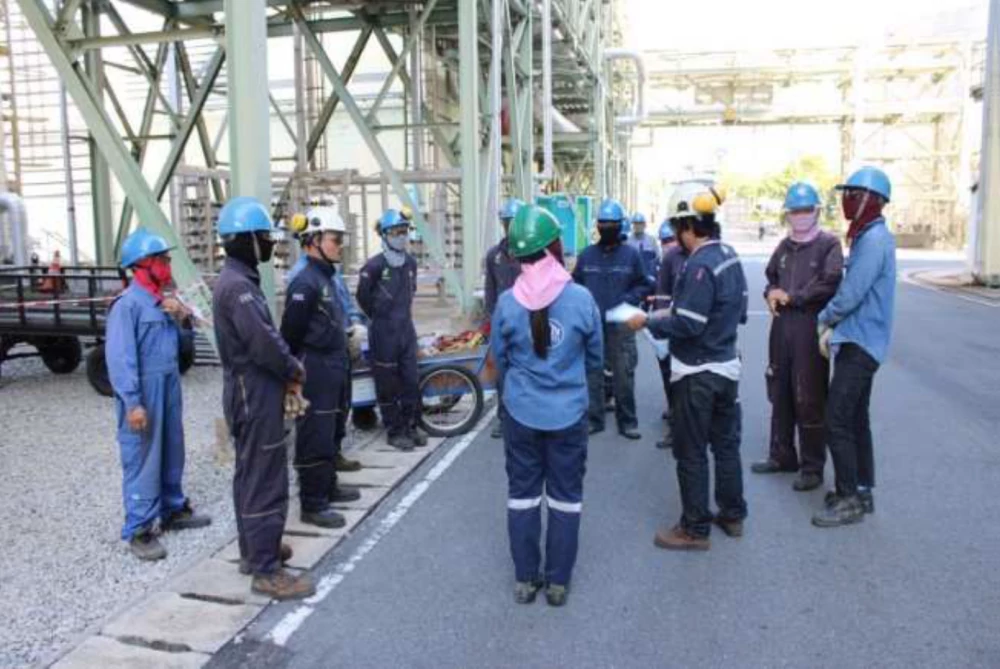
GGC has implemented the B-CAREs KYT Program to promote participation of frontline workers in hazard analysis and prediction. Before starting any work, workers must identify potential risks by referring to e-JSEA and consider three aspects: Safety, Operations, and Supervisors. The program is designed to build a safety culture, reinforce safety measures, and strengthen effective risk management throughout operations
Outcomes and Benefits
- Enhance participation of frontline workers in managing on-site safety
- Increase awareness and understanding of potential hazards before work begins
- Build a safety culture through knowledge and experience sharing via video clips
OHS Program GRI 403-2 (2018), 403-4 (2018), 403-5 (2018), 403-7 (2018)
 |
|
 |
|
 |
|
 |
|
 |
|
 |
|
 |
|
Promotion of Worker Health GRI 403-3 (2018), 403-6 (2018)
GGC places high importance on employee health and provides health check-ups for employees working in high-risk environments, under the supervision of licensed physicians as required by law.
The initial health check-up must be completed within 30 days from the employee’s start date, and follow-up examinations are conducted at least once a year. If an employee is absent from work for three consecutive days due to a work-related injury or illness, or if any abnormality is detected during a health check-up, GGC will arrange prompt medical treatment and investigate the cause of the abnormality to prevent recurrence. All health check-up results are kept strictly confidential in accordance with GGC’s personal data protection policy.
In addition, GGC implements a range of ongoing and comprehensive programs to promote employee health and well-being. For additional information: Our Employee